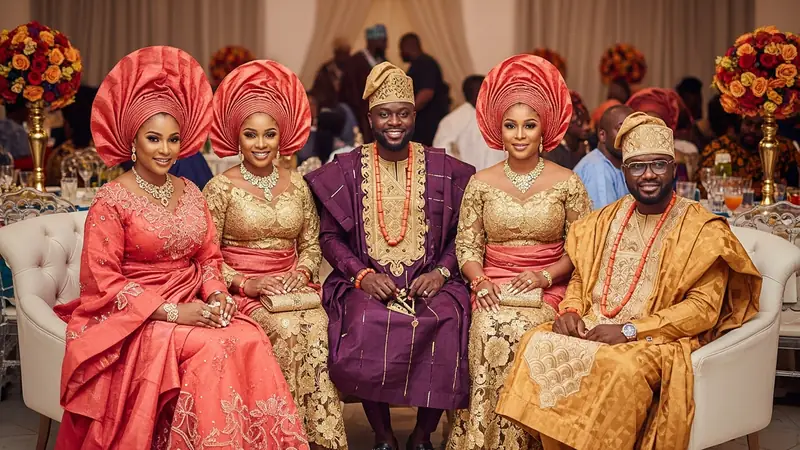
The word "owambe" does not announce itself quietly. You hear it before you see it — the talking drums, the afrobeats spilling into the street, the unmistakable sweep of colour moving through a hall with the confidence of people who dressed specifically for this moment. There is nowhere else in the world quite like a Nigerian party done properly. And there is no question that grips people more reliably in the weeks before it: what do I wear?
This is the guide that answers that question — completely and honestly.
What an Owambe Actually Demands of You
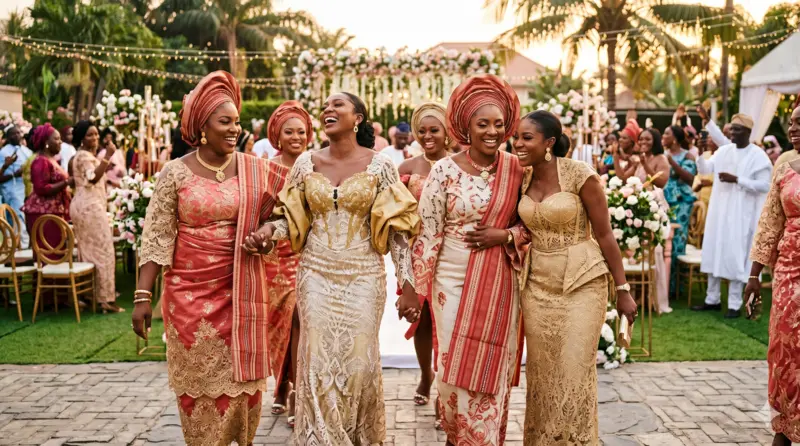
The word owambe started as Yoruba slang — roughly, "it is there" — and evolved into shorthand for a specific kind of celebration: loud, generous, sharply dressed, and unapologetically abundant. These are birthday parties, naming ceremonies, anniversaries, and the larger receptions that follow traditional weddings.
The unspoken rule of every owambe is this: the room will be well-dressed. You are not attending a casual gathering. You are walking into a space where people have thought carefully about their appearance, and they expect the same from you. Underdressing at an owambe is not a fashion mistake — it is a social statement, and not the one you want to make.
The precise level of formality depends on the event tier. A 70th birthday for an elder commands the full weight of traditional fabrics and ceremony. A younger friend's 30th in a hotel ballroom might carry a more contemporary energy. Knowing the tier before you start shopping is the difference between arriving right and arriving out of step.
What Women Wear to an Owambe
For women, the owambe outfit centres on fabric, silhouette, and the gele.
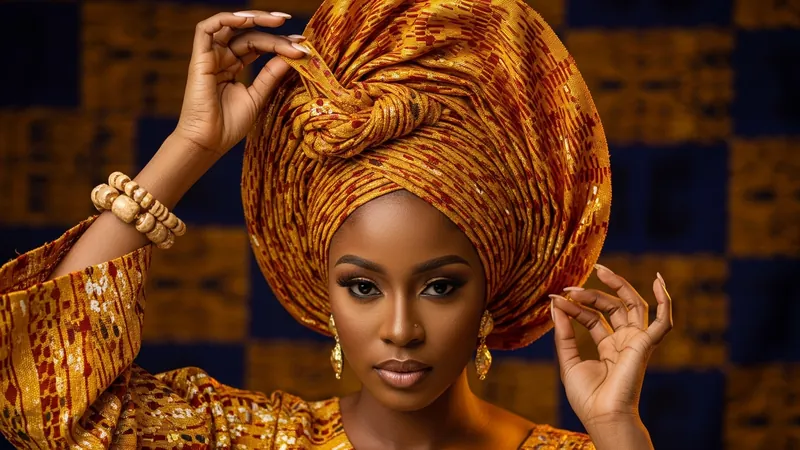
The iro and buba remains the classic combination — a blouse and wrapper in matching fabric, typically Aso-oke or rich lace, finished with a gele that completes the look. Worn correctly, it is effortlessly elegant. It says you understand the occasion.
A kaftan or boubou is a graceful alternative for those who want flow and volume without the complexity of a wrapper. A well-tailored kaftan in structured lace or Aso-oke moves beautifully on the dancefloor and photographs with intention.
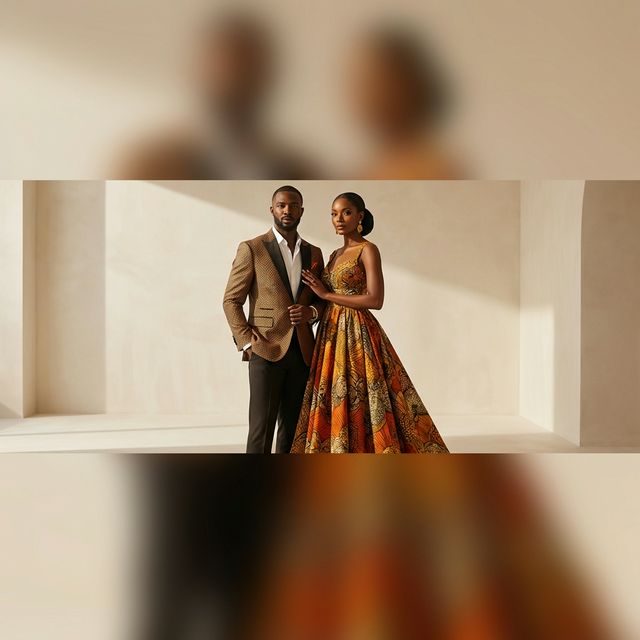
Contemporary gowns cut in traditional fabrics are increasingly popular, especially for younger guests. An Ankara or Adire midi gown with statement sleeves strikes the right balance between modern and meaningful.
Whatever silhouette you choose, the head covering is not optional at a traditional or semi-formal owambe. The gele is the crown of the look. Arriving without one to an event where Aso-oke is the fabric of choice is like wearing a suit without the jacket. If you are not yet confident tying one yourself, book a professional gele artist in advance. It is worth every penny — and every photograph will thank you for it.
What Men Wear to an Owambe
For men, the agbada is the undisputed statement piece. Three layers of richly embroidered fabric — outer robe, inner robe, and trousers — worn with a matching fila. When an agbada fits correctly, it does not just fill a room; it makes the room pay attention. The embroidery work, the fabric quality, and the precise fit of the inner garment are what separate a forgettable look from one people will still be complimenting years later.
For those who want something slightly less formal, or who need freedom of movement for the dancefloor, the senator suit — a long kaftan top worn with matching trousers — is entirely appropriate and reads as a considered choice rather than a concession. Ankara suits are making a strong showing at contemporary owambes, particularly for evening events with a younger crowd.
Whatever the style, the fabric matters. Aso-oke reads as high ceremony. Rich lace is glamorous and versatile. Ankara announces itself boldly. Choose based on the event and the impression you want to leave.
The Aso-Ebi Question
Many owambes come with an aso-ebi — a shared fabric the host family has chosen for their inner circle. If you have been gifted or sold yards of that fabric, your direction is decided: commission your outfit in that cloth, and bring your own style to the cut.
If you are attending without aso-ebi, the convention is to wear complementary colours rather than trying to blend into the aso-ebi crowd. Ask the host family which shades they have chosen. Then work alongside that palette — not in competition with it, and not so far from it that you look like you arrived at the wrong party.
If you want the full story on the aso-ebi tradition — what it means, how to choose fabric, and how to get the fit right — we covered it in depth in our aso-ebi guide.
The Diaspora Owambe
Something significant has happened to the owambe outside Nigeria. In London, Atlanta, Toronto, and Houston, the Nigerian party has become joyfully hybrid. You will see Aso-oke alongside contemporary tailoring, geles alongside natural hair, traditional agbadas beside well-cut Ankara suits. The core rule still holds: wear something intentional. But the range of what counts as intentional has widened considerably.
A beautifully tailored Ankara co-ord at a diaspora birthday sends the same message as a full iro and buba at a Lagos reception: I came dressed, and I know where I come from.
If you are building your owambe wardrobe from scratch and you live outside Nigeria, the most practical approach is a combination strategy. Invest in one bespoke centrepiece — the agbada, the iro and buba, the statement gown — and supplement with well-chosen ready-to-wear pieces for the occasions that follow throughout the year.
The Owambe Rewards Effort
The owambe rewards colour, precision tailoring, and the quiet confidence that comes from wearing something made for you — or chosen with real care.
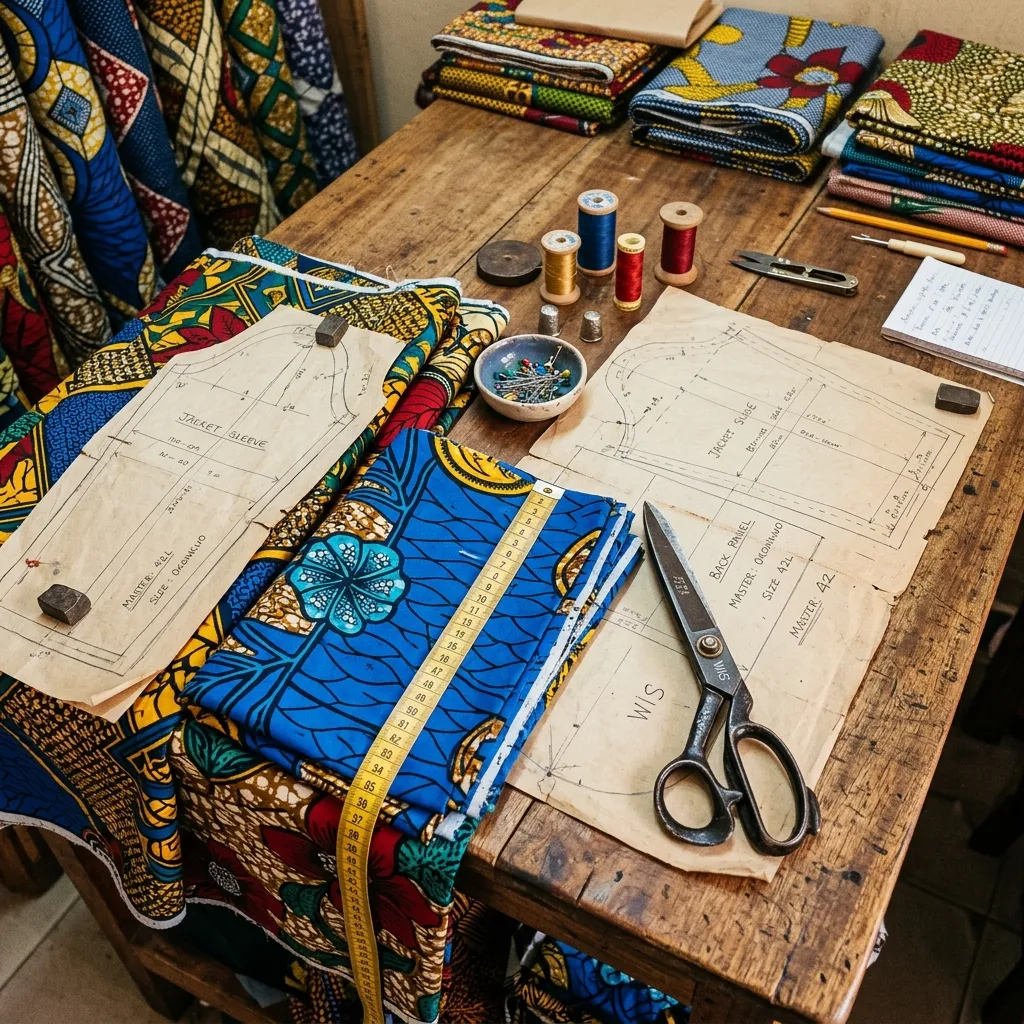
If your next owambe is weeks away, start a bespoke consultation — our tailors specialise in exactly these occasions, and we can guide you from fabric choice to final fitting. If the party is sooner than that, browse our ready-to-wear collection for pieces built for precisely this energy.
You have been invited into someone's celebration. Arrive looking like it.