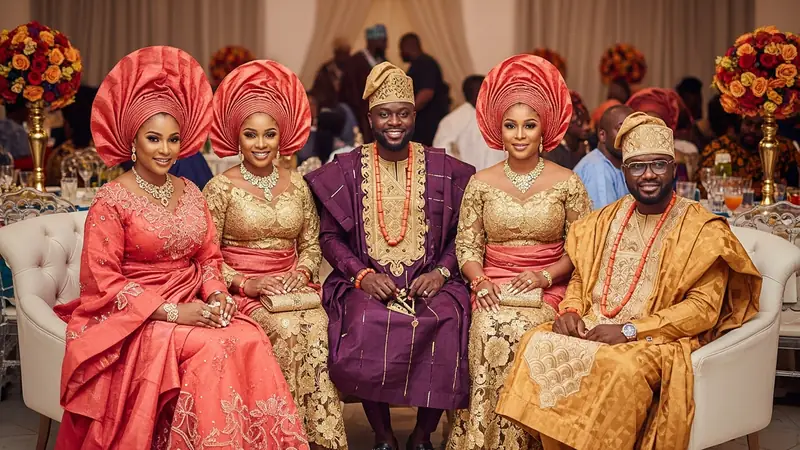
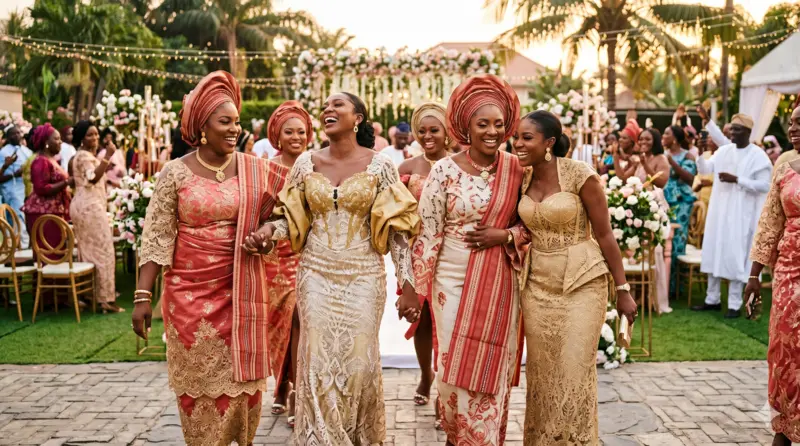
Before the music starts, before the food arrives, before a single vow is exchanged — you can spot an aso-ebi family from across the room. The unified sweep of color, the shared fabric catching the light, the way a group of people becomes something greater than themselves just by what they are wearing. That is aso-ebi. And there is nothing else quite like it.
If you have ever been invited to a Nigerian wedding or a major Yoruba celebration, you already know the weight that comes with those words: "We are doing aso-ebi." It is an honor to be included. It is also, if you have never navigated it before, a process that can feel overwhelming. This guide is here to take the mystery out of it — from what aso-ebi actually means to how to choose your fabric, plan your style, and arrive looking like exactly the person the occasion deserves.
What Aso-Ebi Actually Means
The phrase comes from Yoruba: aso means cloth, and ebi means family. Literally, it is "family cloth." But the meaning runs far deeper than a shared color palette.
Aso-ebi is a declaration of solidarity. When you wear it, you are telling the world — and the family at the centre of the celebration — that you are with them. You are not just a guest who showed up; you are part of their joy. In Yoruba culture, clothing has always been a language, and aso-ebi is one of its most eloquent sentences.
What began as a Yoruba tradition has spread across Nigeria and throughout the diaspora, woven into celebrations from Lagos to London, Houston to Johannesburg. Today, it is practiced at weddings, naming ceremonies, funerals, birthdays, and church anniversaries. The fabric may change — the meaning never does.
Choosing the Right Fabric
This is where aso-ebi planning begins and, truthfully, where most of the energy goes. The host family (usually the bride's or groom's side) selects a fabric, and guests who wish to participate purchase their yards and have it sewn into their own unique style.
The most common aso-ebi fabrics are:
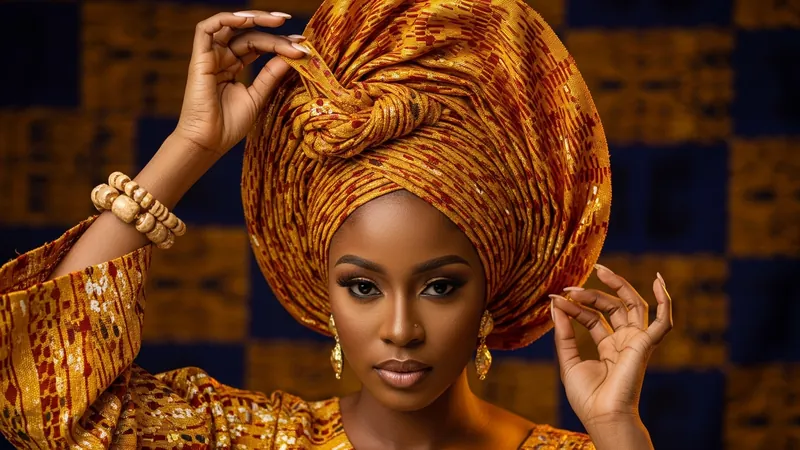
Aso-oke is the fabric of prestige. Hand-woven in Yoruba tradition, it carries an authority that is difficult to replicate. It is the natural choice for traditional weddings and owambe celebrations where you want the room to feel the weight of the occasion. Aso-oke comes in three classic weaves — ìpèlé, gele, and sanyan — each with its own cultural weight.
Lace has become one of the most popular aso-ebi fabrics over the last two decades. French lace, Swiss lace, Guipure lace — the variety is enormous, and the results can be breathtaking. Lace reads as glamorous and contemporary, and it photographs beautifully.
Ankara brings vibrancy and movement. Bold wax prints feel celebratory by nature, and when a crowd of guests is wearing the same Ankara pattern in their own individual styles, the effect is electric.
George fabric — luxurious, heavy, and deeply associated with Igbo and Delta celebrations — is the formal choice for traditional ceremonies in those communities.
When choosing, consider the time of day, the formality of the event, and the season. A heavy Aso-oke at an outdoor afternoon wedding in Lagos will tell a different story than a flowing lace at an evening banquet.
Planning Your Style
Here is the freedom within the tradition: the fabric is shared, but the style is yours. This is what makes aso-ebi so endlessly interesting. Ten guests can receive the same five yards of lace and arrive wearing ten entirely different outfits — and all of them will be correct.
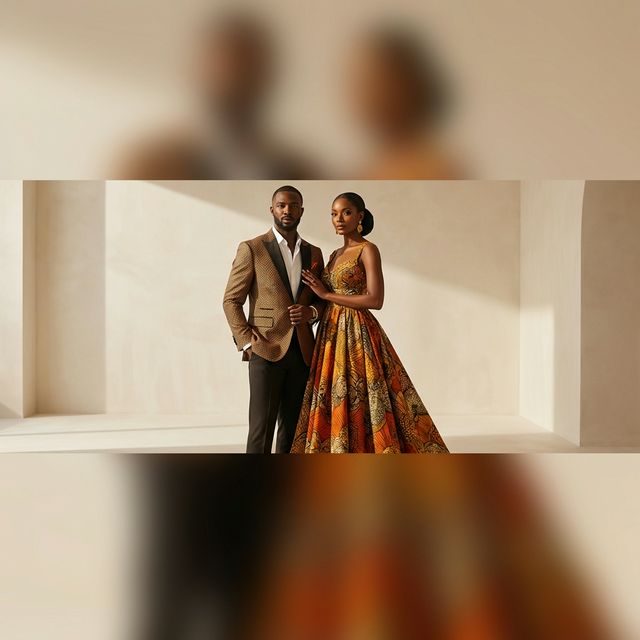
For women, the options range from fitted blouse-and-wrapper combinations (iro and buba) to structured gowns, caftans, agbadas, and contemporary co-ord sets. For men, the classic agbada remains iconic, but sharp Ankara suits, dashikis, and tailored kaftan sets are just as appropriate and increasingly popular.
A few principles that always hold:
Let the fabric guide the silhouette. Heavy Aso-oke wants structured, elevated shapes. Light lace can move and drape. Ankara gives you freedom to go bold with the cut. Trust the material.
Think about the gele. For women wearing Aso-oke especially, the head tie (gele) is not optional — it is the crown of the look. Either learn to tie it yourself or book a professional gele artist in advance.
Co-ordinate, do not clone. If you are attending with a partner or family members, it is lovely to align your styles without matching them exactly. Same fabric, different silhouettes, same sense of occasion.
How to Get the Perfect Fit
This is the part where most people feel the most stress, and it is entirely understandable. You receive your fabric, you have a vision in your head, and now you need a tailor who can execute it — ideally without three rounds of alterations and a last-minute panic.
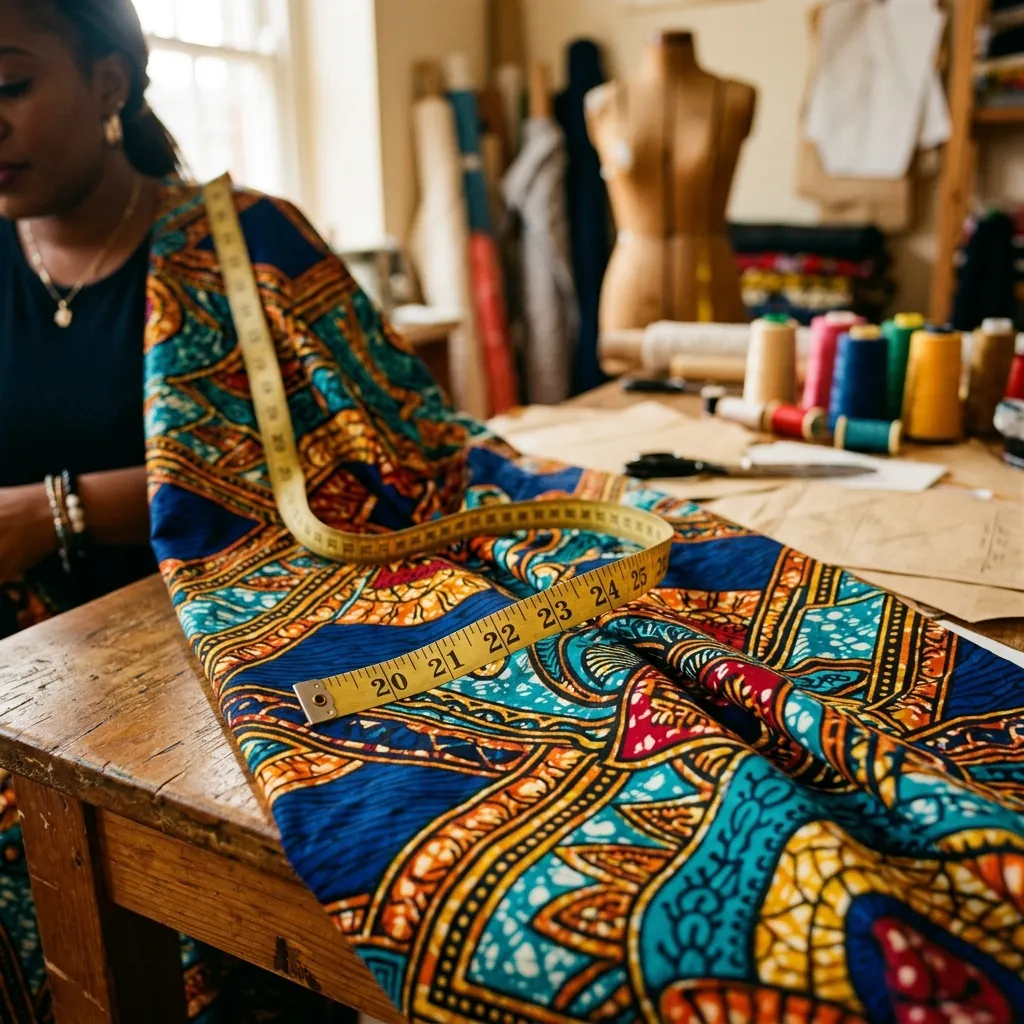
The key is time and measurement. aso-ebi outfits are inherently bespoke by nature: you are starting from a length of shared fabric and building something custom. This means precision matters from the start.
If you are working with a tailor locally, bring clear reference images. Be specific about the neckline, sleeve length, and fit at the waist. Do not assume your tailor knows what "fitted but comfortable" means to you — show them.
If you are ordering bespoke online, the traditional approach requires a slight shift. Due to international logistical constraints, Seamstars does not accept fabric directly from customers. Instead, we have built a seamless system designed specifically to take the stress out of coordinating aso-ebi.
The celebrants—or those assisting them—work directly with us to select the perfect fabric from our trusted suppliers. Once the fabric is chosen, we take over the coordination. We ensure that every member of your party can easily pick their unique style and provide their measurements through our detailed guide. We manage all the custom tailoring from start to finish. We have refined this process for the diaspora—so whether your guests are in Houston, Atlanta, or Baltimore, they arrive at the celebration looking flawless, without the hassle of managing multiple local ateliers.
You can also browse our ready-to-wear collection for aso-ebi-adjacent pieces — especially useful if the host family has chosen a widely available fabric like Ankara, or if you need a complementary statement piece to complete the look.
The Diaspora and the New Aso-Ebi
Something quietly significant has happened to aso-ebi in the diaspora over the last decade. It has evolved from a practice you recreate as closely as possible to one that you genuinely make your own.
Diaspora celebrations are now joyfully hybrid. You will see Aso-oke alongside tailored suits, geles alongside natural hair, traditional silhouettes beside contemporary cuts. The fabric remains the unifying thread, but the styles reflect lives lived across cultures. There is no contradiction in this. There is only richness.
If anything, ordering aso-ebi outfits for an international celebration is where the bespoke process shines most. You are not constrained by what is on a rack. You are building exactly what you want to wear for a moment you will remember for the rest of your life.
Aso-Ebi Is an Invitation
When someone includes you in their aso-ebi, they are not just asking you to buy fabric. They are inviting you into the story of one of the most important days of their life. The outfit you arrive in is your part of that story.
Get the fit right. Choose the fabric with intention. Wear it with the pride it deserves.
Ready to bring your aso-ebi vision to life? Book a bespoke consultation and let our tailors help you create something you will treasure long after the celebration ends — or explore our ready-to-wear collection for pieces that carry the same spirit of celebration.